If you're thinking about selling your home in Cape Coral, you're probably getting two very different messages.
On one side, national headlines are calling Southwest Florida one of the weakest housing markets in the country. On the other, you have neighbors who listed last month and closed in six weeks.
So which is it?
The honest answer: both things are true — and understanding the difference is exactly what determines whether you win or wait.
I've been working with Cape Coral sellers across zip codes, canal systems, and price points, and what I can tell you is this: the market is not broken. It's selective. Homes that are priced right and positioned well are moving. Homes that aren't — aren't.
Here's what the data actually says, and what it means for you.
The Cape Coral Market Right Now: By the Numbers
Let's start with real, current numbers — not statewide averages or national headlines.
As of late April 2026:
- 2,564 single-family homes are actively listed for sale in Cape Coral
- 1,771 single-family homes closed in the last 120 days
- That gives us an absorption rate of approximately 443 homes per month
- Which puts us at roughly 5.8 months of inventory
Six months of inventory is the traditional line between a seller's market and a buyer's market. At 5.8, Cape Coral sits just inside balanced territory — but the story isn't the same across every property type, price point, or neighborhood.
What this means for sellers: Buyers are out there and they are closing. Nearly 1,800 homes sold in the last four months alone. The market isn't frozen — it's filtered. The homes moving are the ones that give buyers a clear reason to act.
Why Some Homes Are Selling and Others Aren't
The most important thing to understand right now is that Cape Coral's market is not performing uniformly. There are homes going under contract in days and homes sitting for six months. The difference almost always comes down to three factors:
1. Pricing Relative to Recent Comparables
The gap between what sellers want and what buyers will pay is wider than it's been in years. Buyers in 2026 are doing their homework. They're seeing price reductions, days on market, and expired listings — and they're using that information at the negotiating table.
Homes priced at or below where comparable properties actually closed (not listed — closed) are the ones generating offers. Homes priced based on 2022 values or neighboring list prices are the ones sitting.
2. Condition and Presentation
In a competitive inventory environment, buyers have options. If your home needs work, has deferred maintenance, or shows poorly online, buyers will simply move on to the next one. Professional photography, a strong listing description, and a clean, decluttered presentation are not optional extras right now — they're table stakes.
3. Flood Zone, Insurance, and Utility Assessments
This is where Cape Coral gets hyperlocal — and where working with an agent who actually knows this market makes a measurable difference.
Cape Coral has a complex patchwork of flood zones, canal access designations, and utility assessment schedules. Buyers are asking harder questions about flood insurance costs, transferability of policies, outstanding assessments, and what it actually costs to own a specific home long-term. Sellers who can answer those questions clearly — and price accordingly — create confidence. Sellers who can't create hesitation.
If your home is in a higher-risk flood zone or carries a significant assessment balance, that's not a dealbreaker. But it has to be factored into pricing and disclosed proactively. Buyers find out anyway, and surprises kill deals.
Is It a Good Time to Sell in Cape Coral?
This is the question I hear most often, and my honest answer is: it depends on your situation — not on the market alone.
Here's the framework I use with every seller I work with:
Selling is the right move if:
- You have significant equity built up and a clear next step — downsizing, relocating, or unlocking capital for another goal
- Your home is in strong condition and can be priced competitively without leaving money on the table
- You're planning ahead, not reacting — meaning you have time to prepare and position properly
- The cost of staying (insurance, assessments, maintenance, carrying costs) is outpacing the benefit of waiting
Waiting may make sense if:
- You bought recently at peak pricing and selling now would put you in a loss position
- Your home needs significant updates that would improve its position meaningfully — and you have the capacity to make them
- You're emotionally or logistically unprepared to move, and a rushed sale will cost you more than patience
The sellers I see struggle are the ones who list reactively — either because they're hoping to time a market that doesn't reward guessing, or because they priced based on wishful thinking and had to chase the market down with reductions.
The sellers who do well are the ones who come in with a clear-eyed strategy.
How Long Will It Take to Sell My Cape Coral Home?
At the current absorption rate, the median days on market for Cape Coral single-family homes is running between 57 and 69 days, depending on the segment and price range.
But median is just a midpoint. Here's a more useful way to think about it:
- Well-priced, well-presented homes in the $350K–$550K range are moving in 30–45 days
- Canal homes with direct or indirect Gulf access in the $600K–$900K range are taking longer — 60–90 days is realistic, and pricing discipline matters more at this level
- Homes priced above $900K are sitting longer; buyer depth is thinner and the pool is largely relocation or investor-driven
- Dry lot homes in the sub-$400K range have the broadest buyer pool and can move quickly if priced correctly
The homes that linger tend to have one or more of these issues: overpricing, deferred maintenance, insurance or flood complications that aren't addressed upfront, or limited online visibility from weak marketing.
What Cape Coral Buyers Are Looking For Right Now
Understanding the buyer pool helps you position your home more effectively.
The majority of active buyers in Cape Coral right now fall into a few categories:
Relocation buyers from the Northeast and Midwest — often remote workers, early retirees, or buyers moving for lifestyle. They're comparing Cape Coral to other Florida markets and they're doing it online before they ever step on a plane. Your listing's first impression is everything to this buyer.
Downsizing sellers from within Florida — buyers coming out of larger homes or higher-cost markets within the state. They often have equity and are cash-strong or minimally contingent.
Investors — more selective than they were in 2021–2022, but still active, particularly in the dry lot and entry-level canal segments.
What almost all of these buyers share: they've done their research, they know what comparable homes have sold for, and they are not going to overpay. The good news is they will pay fairly — and quickly — for the right home.
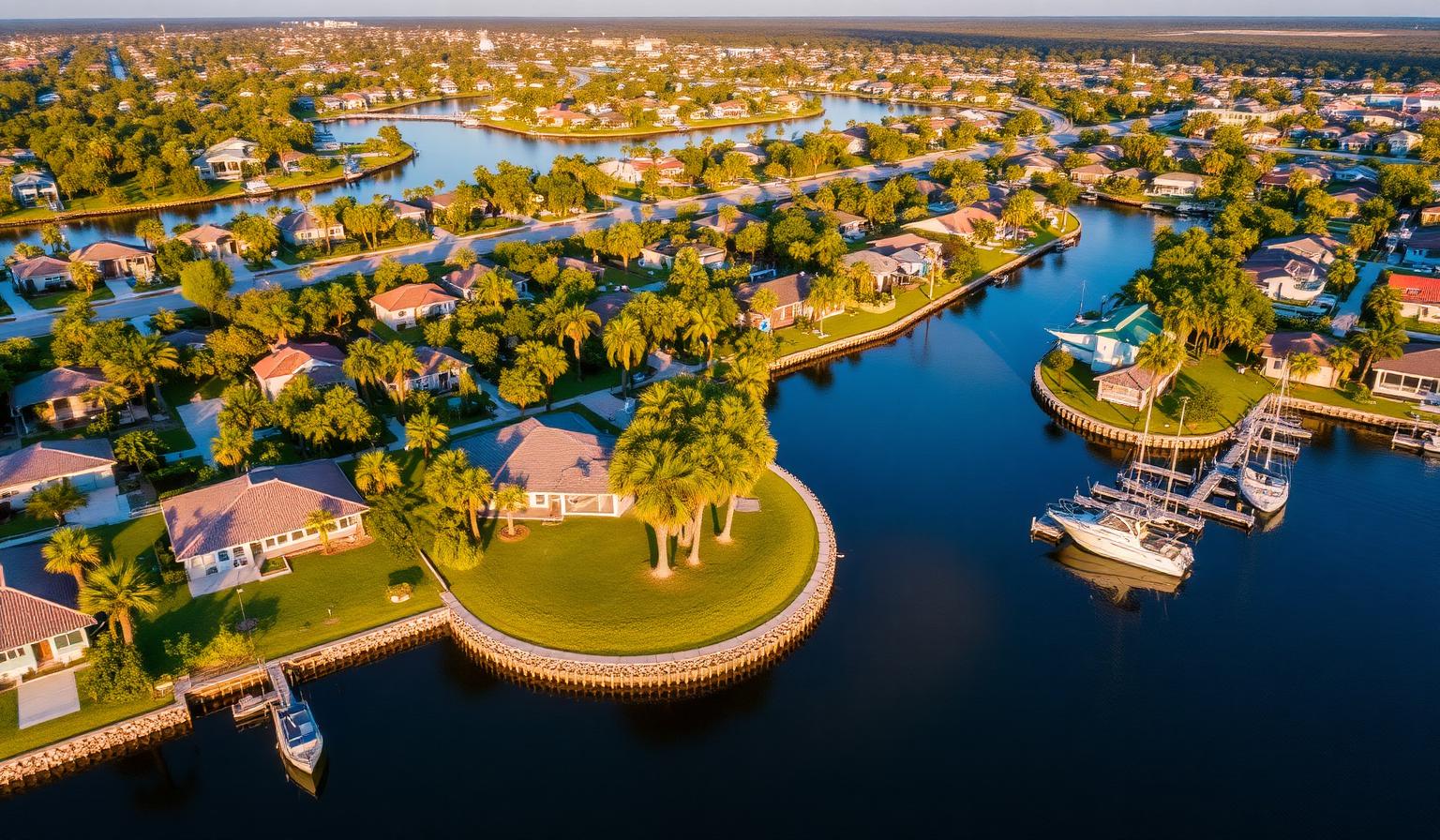
Cape Coral Canal vs. Dry Lot: Does It Still Matter?
Yes — but the gap has narrowed in some segments.
Direct sailboat access canal homes carry a premium that remains intact for buyers who prioritize boating access to the Gulf without bridge limitations. This segment is holding value better than most because the supply is finite.
Indirect (bridged) canal access homes have seen more pressure. The premium is smaller than it was, and buyers are more insurance-cost-conscious, which compresses what they're willing to pay.
Freshwater canal and lake homes offer waterfront aesthetics without boating utility — and are priced accordingly.
Dry lot homes have the widest buyer pool and the simplest transaction profile. No canal, no bridge questions, typically more straightforward insurance.
If you're unsure how your property's canal situation affects pricing, that's exactly the kind of conversation worth having before you list.
Frequently Asked Questions: Cape Coral Home Sellers
How much is my Cape Coral home worth in 2026?
Home values in Cape Coral vary significantly by property type, canal access, flood zone, condition, and location within the city. The citywide median for single-family homes is running around $365,000–$375,000, but individual homes range from under $300,000 to well over $1 million. The only way to know what your specific home is worth is through a comparative market analysis using properties that have actually closed — not listed — in your area.
How many homes are for sale in Cape Coral right now?
As of late April 2026, there are approximately 2,564 single-family homes actively listed in Cape Coral.
How many months of inventory does Cape Coral have?
Based on 1,771 closed sales over the last 120 days (an absorption rate of approximately 443 homes per month), Cape Coral currently has about 5.8 months of single-family home inventory — right at the edge of a balanced market.
Is Cape Coral a buyer's market or seller's market?
At 5.8 months of inventory, Cape Coral is at the boundary between balanced and buyer-favoring. It is not a deep buyer's market, and it is not a seller's market. Sellers who price and present correctly are competing effectively. Sellers who are overpriced are sitting.
Should I sell my Cape Coral home now or wait?
This depends entirely on your personal financial situation, equity position, and timeline — not on a single market metric. The cost of waiting includes carrying costs, insurance, assessments, and missed opportunity if your goals are time-sensitive. A private consultation will give you a clearer picture than any general market summary.
How long does it take to sell a house in Cape Coral?
The current median days on market is 57–69 days, but well-priced, well-presented homes in the most active price ranges are going under contract in 30–45 days. Homes that are overpriced or underprepared take significantly longer.
What is a Cape Coral listing agent?
A Cape Coral listing agent is a real estate professional who specializes in representing sellers — handling pricing strategy, marketing, negotiation, and transaction management. An agent who focuses specifically on the seller side, and specifically on the Cape Coral market, brings a depth of local knowledge that generalist or buyer-focused agents often don't.
What flood zone is my Cape Coral home in?
Cape Coral spans multiple FEMA flood zones, including AE, X, and others. Flood zone designation directly affects insurance costs and buyer financing, and it's one of the first things a serious buyer will investigate. Your agent should be able to look up your flood zone designation and explain how it affects your pricing and buyer conversations.
How do utility assessments affect my home sale in Cape Coral?
Cape Coral has a tiered utility assessment system. Outstanding assessment balances are disclosed at closing and can affect buyer financing and net proceeds. Knowing your assessment status before you list — and pricing accordingly — prevents surprises that can derail transactions.
Working With a Cape Coral Listing Agent
Most real estate agents in Cape Coral handle both buyers and sellers. That's fine for a generalist practice — but if you're selling, you want someone whose expertise is on your side of the table.
My practice is built around sellers. I understand the Cape Coral market at a hyperlocal level — not just the citywide numbers, but the nuances of specific zip codes, flood designations, canal segments, and how buyers are actually responding to different price points right now.
I bring 20+ years of sales and marketing leadership to every listing. That means your home isn't just listed — it's positioned, marketed, and presented to attract the right buyer and hold the strongest possible price.
If you're thinking about selling — even if it's six months from now — I'd welcome a straightforward conversation about where your home stands.