Published June 2026 · CapeCoralListingAgent.com
One of the most consistent mistakes I see Cape Coral sellers make right now is treating the market as one single, uniform thing.
It isn't.
The Cape Coral real estate market in 2026 is a collection of very different micro-markets — each with its own inventory levels, buyer pool, days-on-market reality, and pricing dynamics. What's true for a Gulf-access waterfront estate is not true for a three-bedroom non-waterfront home in 33991. What applies to a home with impact windows and a newer HVAC is not what applies to one with original single-pane windows, an aging system, and years of deferred maintenance.
If you're planning to sell, understanding which market your home belongs to — and what that market is actually doing right now — is the single most important thing you can do before you set a price, choose an agent, or go to market.
Here's an honest, segment-by-segment breakdown of what's moving, what's sitting, and — critically — why.
What's Selling: The Active Segments
Non-Waterfront Homes in the $300K–$450K Range
This is the most active segment in Cape Coral right now, and it's worth understanding why.
Buyers in this price range include a mix of local move-up and move-down buyers, retirees relocating from higher cost-of-living states, and out-of-state buyers entering the Southwest Florida market at a more accessible price point. The combination creates a genuine buyer pool — not overwhelming demand, but consistent, real interest from qualified people.
When homes in this range are priced correctly and presented well, they move. Not at the frantic pace of 2021, when multiple offers and waived inspections were commonplace, but within a timeframe that doesn't damage the seller's negotiating position.
The operative phrase is priced correctly. In this segment, overpricing by even 5–8% can push a listing into stale territory within two to three weeks. Buyers at this price point are often working with lenders who have approved them for a specific number, they're comparing five to eight properties at once, and they don't feel urgency. They'll simply move on to the next option. The listings that succeed here are the ones that hit the market at a number buyers recognize as honest — and then compete for it.
Move-In Ready Homes with Clean Insurance Profiles
Across all price points, one characteristic consistently differentiates the listings that perform from the ones that struggle: insurance clarity.
Homeowners insurance — and particularly flood insurance — has become a defining factor in buyer decision-making in Southwest Florida. Buyers are no longer just evaluating purchase price and mortgage payment. They're calculating total monthly cost of ownership, and in Cape Coral, insurance can add $600–$1,500 or more per month depending on the property's age, flood zone, roof condition, and claims history.
Homes that tell a clean insurance story command real advantages right now. In Cape Coral's post-Ian market, roofs have largely been replaced across the board — so the insurance differentiators that matter most today are impact-rated windows and doors, no prior claims, and elevation certificates that support favorable flood insurance rates. These aren't just selling points — they're directly tied to whether a buyer's lender approves the loan and whether the monthly payment math works.
Sellers who proactively assemble this documentation before listing — and who have, ideally, already obtained an insurance quote to share with buyers — are starting the conversation from strength rather than scrambling through due diligence.
Well-Located Properties with Genuine Lifestyle Appeal
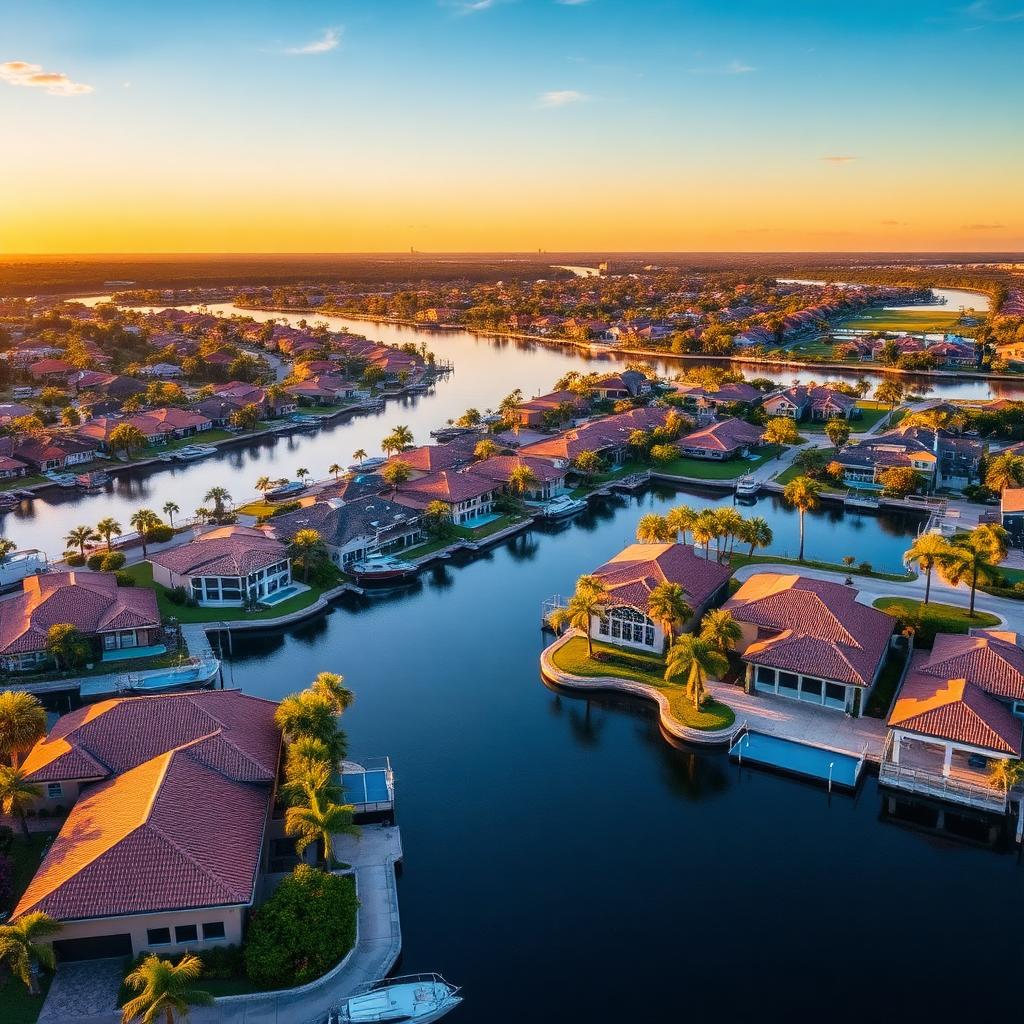
Cape Coral's appeal has always been about lifestyle — the canals, the waterfront access, the outdoor living, the proximity to Fort Myers and Gulf beaches. That appeal hasn't diminished. What's changed is that buyers are being more selective about which properties genuinely deliver on it.
Homes that sit on or near navigable canals, that have thoughtfully designed outdoor living spaces, that feel genuinely livable and not just constructed — these continue to attract buyers even in a softer market. Not every home needs a pool or a boat lift to compete. But the properties that feel like they were designed for the Southwest Florida lifestyle, rather than simply built to a spec, consistently outperform those that don't.
What's Sitting: The Struggling Segments
Homes Priced Above $600K
This is where the market softness is most pronounced, and most sellers in this range need to hear it plainly.
Inventory above $600K in Cape Coral is elevated. Days on market are long. Buyer activity is measured, not urgent. And buyers in this category — whether they're purchasing a waterfront property for retirement or a Gulf-access home as a vacation asset — are sophisticated, patient, and not inclined to overpay.
The challenge is that many sellers in this range are still anchored to 2022 or 2023 valuations. Prices in this segment have come down meaningfully from peak — in some cases 10–15% or more — and sellers who haven't internalized that reality are pricing into a gap that buyers simply won't cross.
This doesn't mean $600K+ homes won't sell. It means they require a different kind of strategy: pricing that's genuinely competitive, marketing that reaches the right buyer pool (often out-of-state and international), and patience combined with a willingness to negotiate on terms, not just price.
Older Construction with Deferred Maintenance
Buyers in today's Cape Coral market are acutely aware of what it costs to bring a home up to standard — and they're pricing that cost into their offers, often more aggressively than sellers expect.
One important note for local context: after Hurricane Ian, virtually every roof in Cape Coral was replaced. Roofing age is largely off the table as a differentiator in the way it was before 2022. What buyers and their agents are scrutinizing now are the condition flags that Ian didn't automatically fix.
Original single-pane windows versus impact windows is one of the biggest. Impact-rated windows and doors are not just a safety upgrade in Southwest Florida — they are directly tied to insurance premiums. A home with original single-pane windows will carry meaningfully higher insurance costs than a comparable home with full impact protection. Buyers know this. Their insurance agents will quote it. Their lenders will underwrite it. When a seller has original windows and hasn't factored the insurance differential into their pricing, buyers do it for them — in the form of a lower offer or a repair credit demand.
Aging HVAC systems are the other major flag. In the Florida climate, an HVAC system is not a luxury — it runs essentially year-round. A system that's 12–15 years old or older will draw scrutiny on every inspection report, and buyers will price replacement cost into their offer or their repair request. A unit that's clearly struggling — slow to cool, noisy, showing signs of rust or neglect — can derail a contract faster than almost any other single item. Sellers with aging systems have a choice: replace proactively and price accordingly, or price to reflect the buyer's anticipated cost and be prepared to negotiate.
Visible deferred maintenance — cracked driveways, worn flooring, stained ceilings, deteriorating screens, overgrown landscaping — signals to buyers that the less visible systems may have been treated the same way. Even when the bones of the home are solid, the visual cues of neglect create doubt that's hard to overcome with negotiation. Buyers discount for what they see and what they imagine they're not seeing.
The mistake I see repeatedly is sellers who have lived in and loved their homes for decades and genuinely can't see the condition objectively anymore. It's completely understandable — but it's expensive. A pre-listing walkthrough with an honest agent, and ideally a pre-inspection, will surface issues you can address strategically before they become leverage for buyers at the worst possible moment.
Properties with Insurance or Flood Zone Complications
Some properties in Cape Coral carry flood insurance costs that materially affect a buyer's monthly payment — sometimes dramatically. An elevated FEMA flood zone designation, a history of claims, or a property without an elevation certificate can result in flood insurance premiums that price a home out of reach for buyers whose purchasing power is already constrained by current interest rates.
When sellers in this category don't account for these costs in their pricing, there's a predictable outcome: buyers get excited about the home, run the numbers with their lender, and the deal doesn't pencil. Offers don't come. Or they come and fall apart during the insurance research phase of due diligence.
The solution isn't necessarily to dramatically reduce price — it starts with understanding your specific insurance picture before you list. Get an elevation certificate if you don't have one. Obtain actual insurance quotes. Understand what a buyer will pay monthly on your property at your asking price. If the total cost of ownership is out of alignment with market reality, that conversation needs to happen before you go to market, not after a failed contract.
Why the Gap Between What's Selling and What's Sitting Is Widening
A few forces are working simultaneously to create the divide we're seeing.
- Buyer sophistication has increased. The buyers actively purchasing in Cape Coral right now have often been watching the market for months — sometimes longer. They know what comparable homes have sold for. They have a sense of which listings are priced right and which are aspirational. They're not going to be swayed by a number that doesn't align with recent closed sales, regardless of how beautifully the listing is photographed.
- Inventory is tighter than the narrative suggests — but buyers still have options. Active inventory in Cape Coral stands at 2,399 single-family homes as of May 2026, down 28.6% from a year ago. That's a meaningful contraction from the flooded market of 2025. However, 2,399 active listings still gives buyers genuine alternatives — and with closed sales running at 480 per month, that's roughly 5 months of supply. Buyers in the $600K+ range have considerably more options than buyers in the $300K–$450K range, which is why the experience of the market differs so sharply by segment.
- Total cost of ownership is the real number. Buyers and their lenders are underwriting the full monthly cost of homeownership, not just mortgage principal and interest. In Cape Coral, that calculation can include flood insurance, homeowners insurance, HOA fees, and CDD assessments — amounts that can add $800–$2,000 per month to the carrying cost of a home. Sellers who price to the purchase price without accounting for these layers are creating gaps that don't get closed at the closing table.
- Presentation still creates competitive advantage. Even in a buyer's market, presentation matters. Homes that show well — professionally photographed, cleanly staged, with well-maintained landscaping and a clear sense of care — consistently perform better than comparable homes that don't. Buyers are making emotional decisions as well as financial ones, and a home that feels well-loved and move-in ready invites a different kind of offer than one that feels neglected.
What This Means for Your Listing Strategy
Understanding the market at this level of granularity isn't an academic exercise — it has direct, practical implications for how you approach selling your Cape Coral home.
- Know which micro-market you're in before you price. Look at genuinely comparable sales — same general area, same construction era, similar condition, similar flood zone — closed in the past 60–90 days. Not currently listed homes (which are your competition, not your comparables), and not peak-year sales that no longer reflect today's reality.
- Address condition issues before they become negotiating liabilities. A pre-listing inspection — even an informal walkthrough with a contractor — can surface issues you weren't aware of and give you the choice of how to handle them strategically. Fixing them proactively costs less and preserves your pricing.
- Get your insurance story straight before going to market. Know your flood zone. Know your claims history. Know what insurance will cost a buyer. This information belongs in your marketing preparation, not in your due diligence scramble.
- Work with a marketing plan, not just a listing. Even with inventory contracting, 2,399 active listings means your home has real competition. Professional photography, targeted digital marketing, network exposure to agents with active buyers, and strategic open house activity all contribute to reaching the right buyer at the right time.
- Price to attract, not to negotiate. The strategy of "pricing high to leave room" is expensive in this market. The sellers who come out best price accurately from day one, generate real interest in the first two weeks, and close with stronger net proceeds than those who chased the market downward for months.
A Note on Timing
February through July has historically been the strongest selling season in Cape Coral. If you've been considering listing and waiting for a "better time," it's worth knowing that we are in that better time right now. The buyer activity that peaks in spring and early summer tapers in August and September, then gradually rebuilds toward the following season.
This doesn't mean a fall or winter listing is a mistake. Some of my clients do very well listing in the fall, particularly when they're targeting snowbirds making purchase decisions about a winter retreat. But the timing question deserves a real, strategic conversation — not a reflexive delay.
Let's Talk About Your Specific Property
Every home is different. Every seller's situation is different. The broad market picture I've painted here is useful context, but what matters most is understanding exactly where your home fits within it — and what a realistic, well-executed sale looks like for you specifically.
That's the conversation I specialize in. Strategic, honest, and with no pressure in any direction. Request a personalized Home Value Report or schedule a seller consultation to start the conversation.
Carleen Murone, GRI · REALTOR® · Living Well in SWFL at eXp Realty · Seller Representation Specialist · Cape Coral, Southwest Florida